Two decades of semiconductor evolution and the forces shaping what comes next.
Semiconductor innovation has transformed how the world computes. Over the past two decades, the industry has advanced through successive waves of smartphones, automotive electronics and AI infrastructure, each bringing greater demands for processing power, efficient data movement, and sophisticated system architecture. Today, designing competitive silicon increasingly means architecting complete computing systems, where performance, power efficiency, safety and security depend on how effectively the components work together.
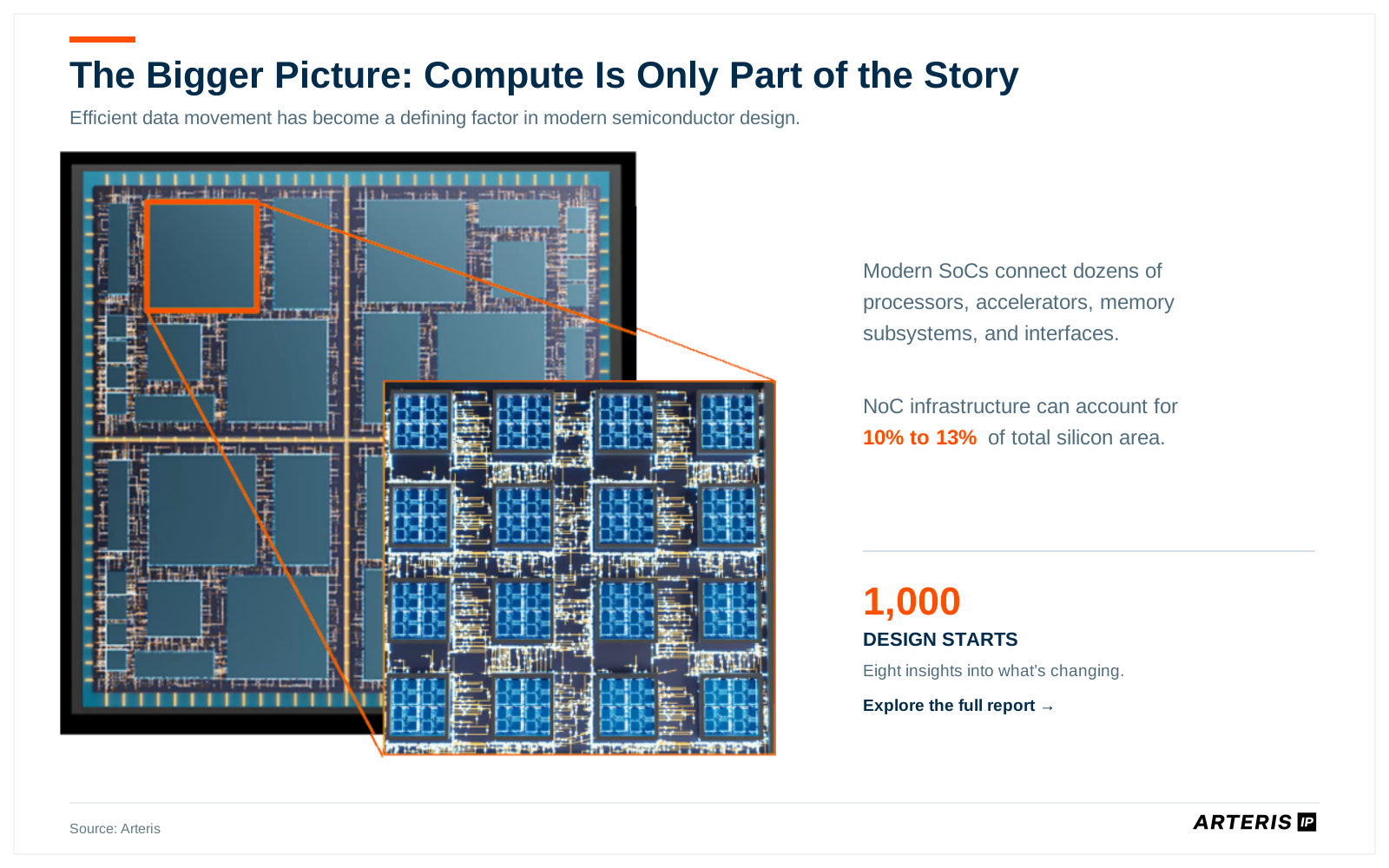
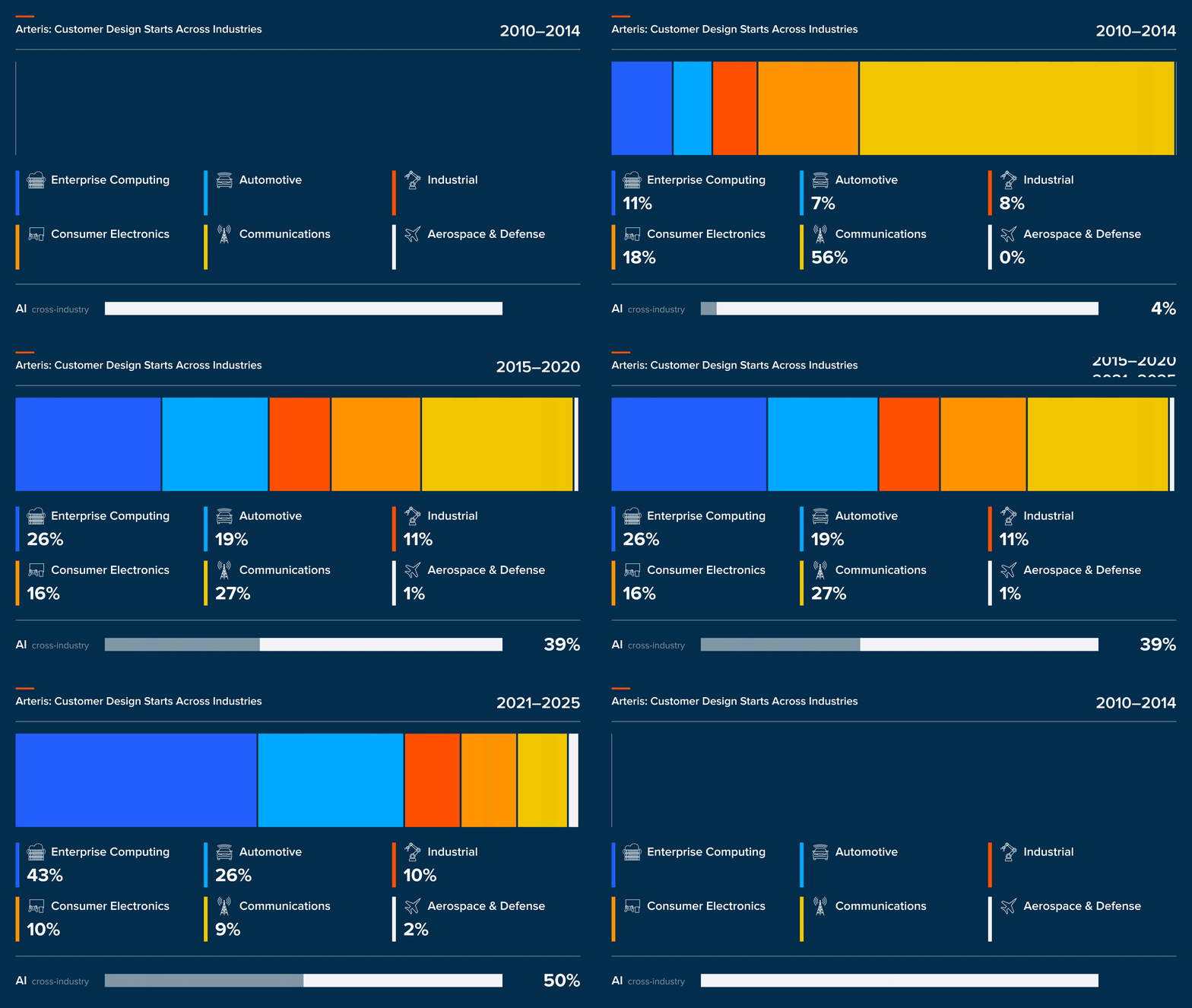
In 2026, Arteris reached a milestone of 1,000 confirmed silicon design starts, providing a distinctive perspective on this evolution. The data reveals a significant shift toward compute-intensive markets, rapidly increasing architectural complexity, and the growing importance of interconnect and system-level design. It also reflects enduring customer relationships, with repeat customers returning to Arteris System IP across successive silicon designs.
Drawing on nearly two decades of customer design activity, engineering expertise, and independent industry research, the report identifies eight key trends reshaping semiconductor architecture and explores the challenges and opportunities ahead.
Download the report to discover:
Explore the insights behind 1,000 design starts and the innovations shaping what comes next.
“The next wave of semiconductor innovation will be shaped by how effectively companies connect, coordinate, and scale increasingly sophisticated computing systems. As AI drives new demands across data centers, automotive, and physical AI, Arteris continues to advance the system IP and automation technologies that help customers develop differentiated silicon and bring products to market faster.”
K. Charles Janac, President and CEO, Arteris